April 2010
S
M
T
W
T
F
S
15 16 17
18 19 20 21 22 23 24
25

films
highlights
locations
tickets
about the festival
sponsors
awards
Pictures
thanks
press
home
arabian sights

1-800-955-5566

Questions?
Call our hotline
202-234-FILM (3456)


Join our Mailing List


Bel Cinema!
New Italian Cinema

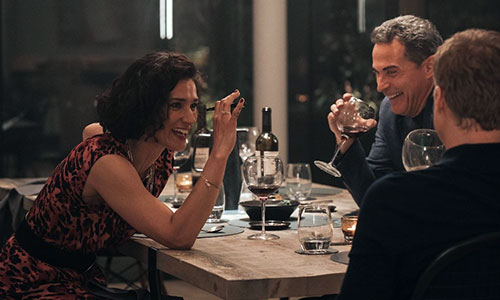
Whether neorealist, meditative, or "Felliniesque," Italian film is a category almost as big as cinema itself. The eight movies in this year’s overview include a documentary, family tales both sad and sweet, and a drama inspired by classic opera. And, yes, there's one about the Mafia.

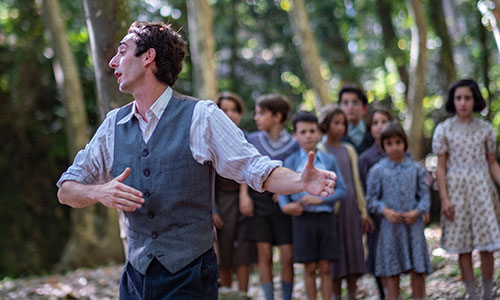
Veteran director Pupi Avati travels to 1954 Bologna for Friends at the Margherita Café, in which the 18th-year-old "Kid" attempts to infiltrate the glamorous demimonde of a neighborhood hangout. The film's eccentric characters are almost as colorful as the ones in La Pivellina, whose central players work for one of Italy's small traveling circuses.

Both I Am Love and Puccini and the Girl are tales of passion set at the dawn of the 20th century. The former shows the disruptive and ultimately tragic effects of love on characters who might seem to have everything they need. The latter is a graceful, even musical account of the ill-conceived events between Puccini and his maid.

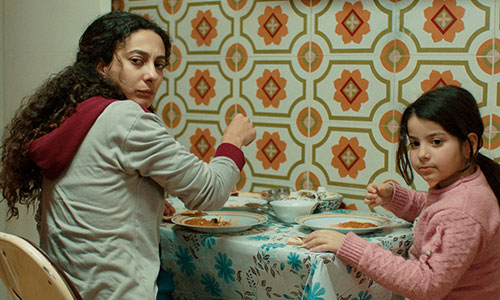
More gently, the poignant Quiet Chaos observes a man's obsessive attempt to envelop his young daughter after her mother's shockingly sudden death. And the delectable Mid-August Lunch shares a meal with an elderly woman who's forced to enjoy some other ladies' company.

Based on actual events, The Sicilian Girl introduces us to a teenage girl who dared denounce the mob that claimed her father and brother. Even closer to actuality is Videocracy, a look at Silvio Berlusconi's political and television empires that suggests that nothing in Italy is more Felliniesque than real life. — Mark Jenkins

The New Romanian Wave

For the past twenty years, since the Revolution that overthrew dictator Ceausescu, Romania has been running away from communism. With but a few exceptions, the new Romanian cinema looks back in anger, irony, humor, and sometimes detachment. Even when it mirrors the present, there are still remnants and wounds of the communist era.

It's not surprising that this swing between the past and the present can be disconcerting to international viewers, who find themselves unsure of the time dimension they are actually witnessing. There were, for instance, critics convinced that 4 Months, 3 Weeks and 2 Days is a contemporary story and that Police, Adjective was a sample of the life in the communist era, when, in fact, it’s quite the opposite. One can't help but notice that the recent history and its side effects are creeping, even at subconscious levels, into the present of Romanian Cinema.

In Filmfest DC's New Romanian Wave series, Tales from the Golden Age and Silent Wedding recall the past and exploit its comic potential and stories of extreme endurance in a hostile environment. The other three films in this series (Medal of Honor, The Other Irene, and The Happiest Girl in the World) have a firm grip on the present but pay tribute to the past, portraying a society in transition that struggles to progress despite the presence of mental inertia, thick bureaucracy, and the seduction of consumerism. — Mihai Chirilov

Justice Matters

The tradition of using film to expand awareness of social justice issues runs long and deep. When an individual or a group has been treated unfairly, filmmakers use their craft to make us aware and, hence, call us into action. It is within this practice that Filmfest DC launches the Justice Matters section of its program. What better city to highlight this tradition than our nation's capital, the vortex of ongoing debate on how best to further democracy and equitable treatment for all.

The six features in this inaugural selection include narratives and documentaries from around the globe. What the filmmakers have in common is a mastery of their art coupled with a commitment to illuminating social wrongs and revealing the potential that always exists for good-willed people to make a difference. All of these films are entertaining and engaging. None are dogmatic or polemic. All are mature in acknowledging that simple conclusions are not adequate for complex issues. Some draw from history (Dawson, Island 10, Saviors in the Night, The Balibo Conspiracy), while others are contemporary (The Sun Behind the Clouds: Tibet's Struggle for Freedom, Women Without Men). Many are inspirational and remind us that we can overcome adversity (Soundtrack for a Revolution). The Justice Matters films also remind us that oppressors are strong and equally determined and that taking steps toward social justice is never easy, simple, or quick. We want to thank the CrossCurrent Foundation, for their support in helping to make this series possible. — Tony Gittens, Festival Director

Deepening the Impact of Social Justice Films

This year, Filmfest DC has initiated a pilot program to explore ways the festival experience can be extended beyond the theater. Many independent filmmakers passionately focus on telling a story where the need for social justice and change are apparent. In recognition of their commitment to articulate important issues to the broadest possible public, we have selected the films Soundtrack for a Revolution and Sun Behind the Clouds: Tibet's Struggle for Freedom to participate in a special initiative to deepen their impact in our area. The program includes a series of offsite programs and presentations for students and community groups. Our website includes additional resources.

This project is conceived and directed by Linda Blackaby, Senior Programming Consultant.

We would like to thank the Wyncote Foundation for their assistance with making Deepening the Impact of Social Justice Films possible.